"Each Old Bike is a Unique Case"
Every old bike you work on is an individual case, especially with older bikes made prior to the 1970s, where parts and other examples become increasingly scarce. One bike might be an original that is complete and in excellent condition. Those you'll want to simply preserve as best you can. Other bikes may be missing parts or need repairs, or have parts that have been swapped. Those cases are good for doing something a little more individualized, but still adhering to some basic historical parameters. Still other bikes might be a bare frame or heavily modified already. In those instances, it might be fine to go with a full-custom bike. Decide based on what's in front of you and not on some fixed-in-stone notion that you "must" do or not do something.
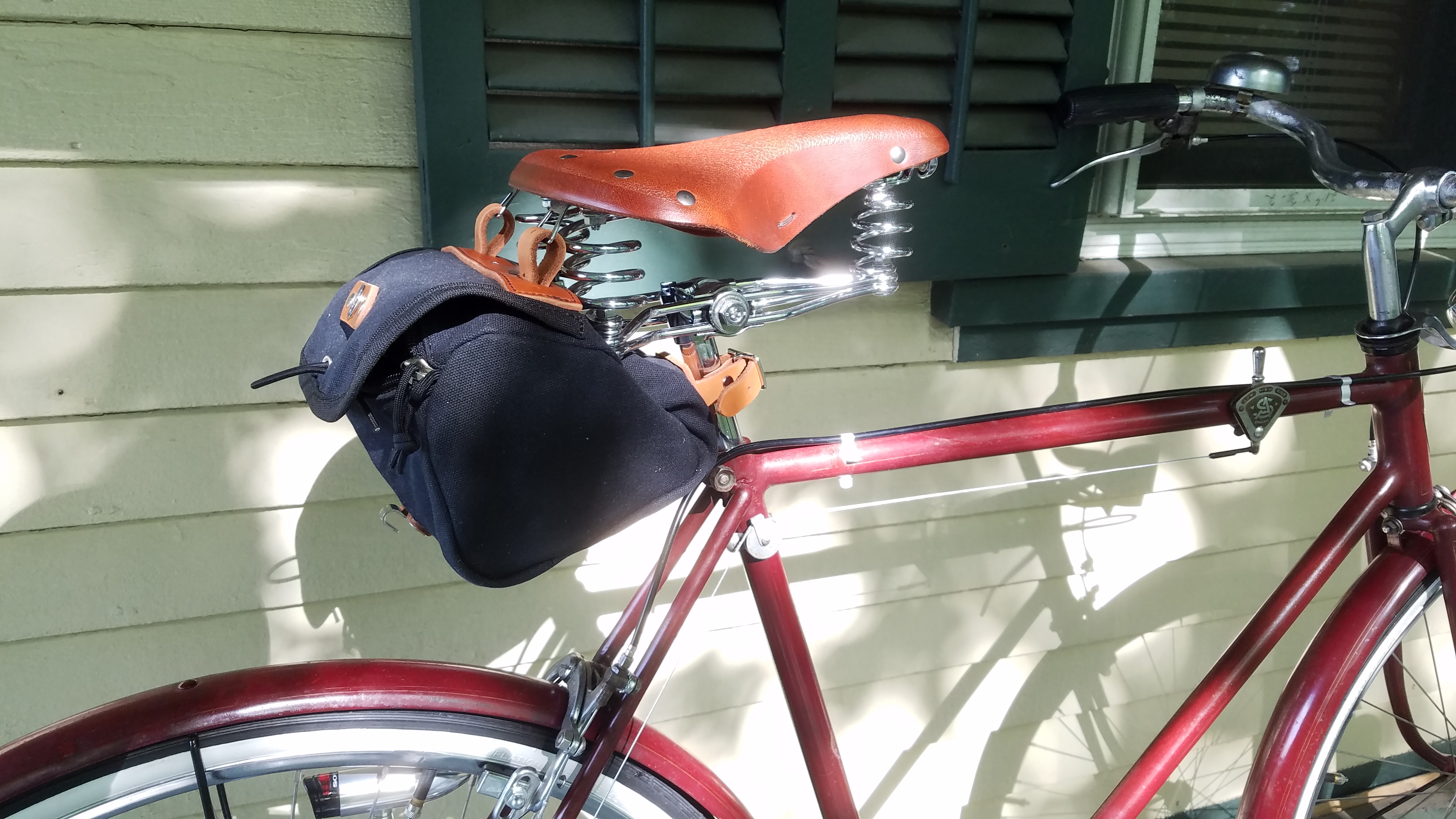
This 1942 New World arrived as a frame, fork, and fender set. The idea here is to preserve as much as I can, while supplementing the bike in a way that is historically respectful to the time period and practical to get the bike back on the road in a comfortable and safe form. Going for a 100% perfect, WWII rebuild would result in the frame and fork sitting for months (or years) while I cast about for parts dating to precisely 1942 for a Schwinn New World model bike. I'd rather have a bicycle than a wall hanger...
"Historically Acceptable Practicality"
This principle is a primary guide. Look for period parts or quality period type reproduction parts that also will allow you to ride the bike comfortably and safely. Look for parts that fit in with the time period, but that also work and won't break the bank. Remember that you've already decided you don't need to go out and find 100% original parts for that particular model and year, so you have some flexibility to get this bike back on the road in an acceptable (even if not 100% perfect) way.
Let's take the example of this 1942 New World. The rims are chrome Schwinn S6 rims. The S6 is a rim more from the later 1940s, and chrome only was used in very limited circumstances on bikes during WWII. However, these rims also are in excellent condition, straight, and appropriate for a late 1940s bike. They capture the overall decade while also making for a good riding set of wheels.
The Sturmey Archer AW hub is from the 1950s, but again is technologically very close to a 1940s bike. AW hubs were made from the 1930s onward, though this bike probably had a single speed coaster brake originally. The hand brakes are "Schwinn Built" steel calipers from just after WWII. It's not all year-perfect, but it's all vintage and all technology from the time period. The gears are needed to ride the bike where I live, and it's nice having a set of working caliper handbrakes when you're headed down a hill and the speed is pushing 30 or 35 mph.
The Gyes leather saddle is a copy of a Brooks B73 and similar saddles from other makers - classic triple spring roadster saddle from the 1930s - 60s. A new leather saddle lets you ride in confidence knowing that an 80+ year old saddle isn't going to break up underneath you while riding along. It also captures a time period look.
New brake and shifter cables help make the bike safe. A dark colored housing is used so as not to stand out as too "bright" and "plasticy". New brake pads blend in and help stop the bike better than old.
"Historical Aesthetic"
Ask yourself what the predominant design styles of the period of manufacture would have been. Was art deco still a major force? Or were designs more of a "streamlined" type? Or was it more "mid-century", with lots of chrome and high-contrast bright work? What about colors - was this a period of bright "candy" type colors, or was it a more conservative time?
Use period catalogs and other examples to get an idea of what will go well with the bike from that time period.
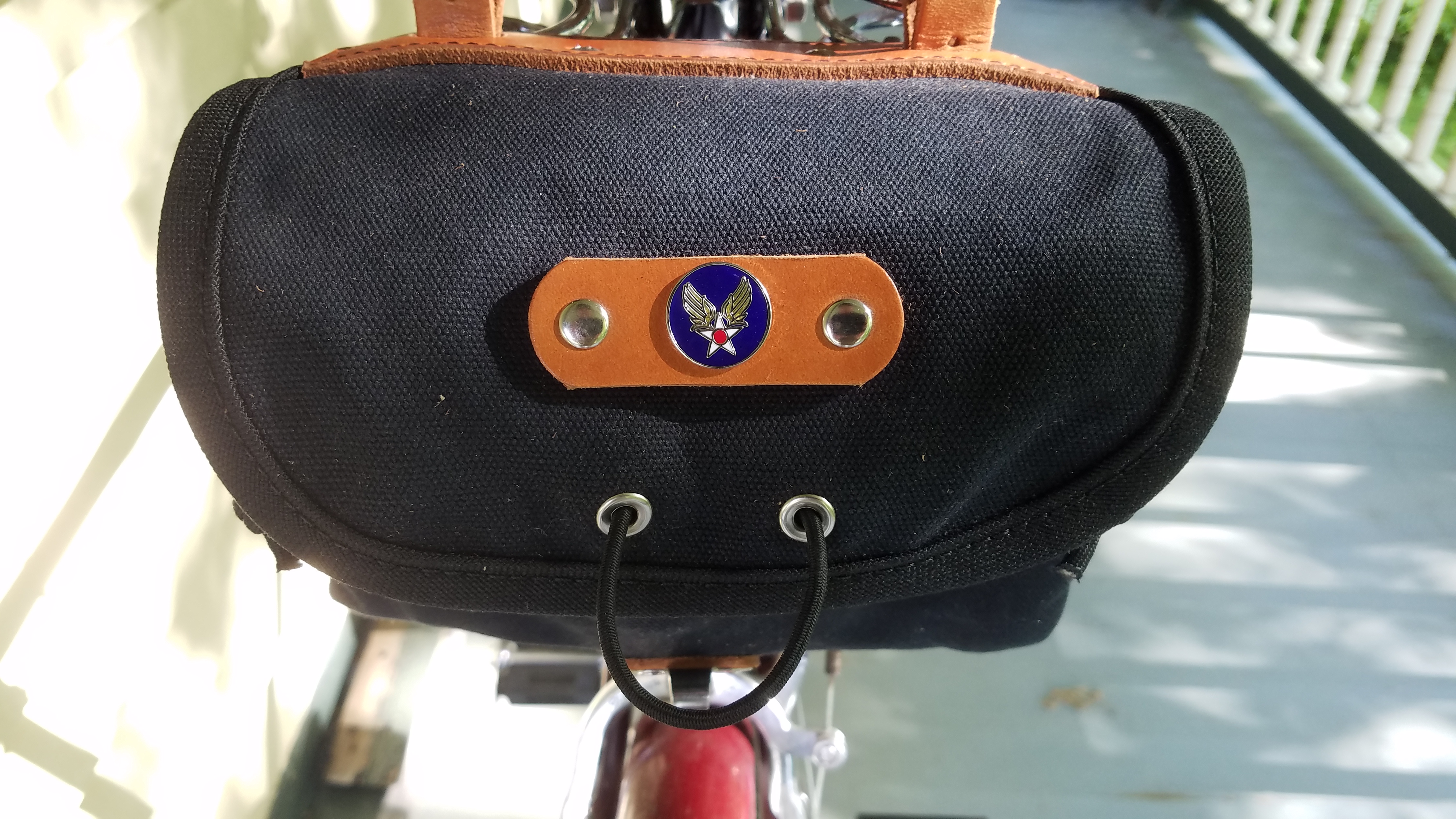
In the case of this 1942 New World for example, the dark red color was typical of the 1940s period, and the silver wing was a popular motif in the 1930s-40s. The WWII themed Army Air Corps/Force lapel pin on the bag also adds a period touch, as do the reproduction teardrop or aircraft wing cross-section type pedals.
And the light set - retro LED type lights. It's important to be seen while riding alongside automobile traffic. Bright LED lights that flash add a level of safety, while the tear drop and torpedo housings match a 1930s-50s aesthetic. Remember, we want to capture the designs of the time period, but we also want to be safe while riding on the road.
The Sturmey Archer quadrant shifter is at home on a 1930s-40s era bike. This bike may have been a single speed coaster at one time, but with the three speed hub, a Sturmey Quadrant shifter is perfect for historical appearance and function.
Dark brake cable housings blend in with the bike and match the black "Schwinn" grips. Traditional black rubber brake pads with metal housings blend in while also helping to stop the bike because they are fresh rubber.
Pre-WWII Schwinn Superior handlebars represent a period upgrade, are comfortable, and match the look of the bike.
"Respectful Restoration / Work"
I often use the term "respectful" describing the work to be done on a project. As I mention above, you need to respect the age of the project, condition, time period trends, as well as safety and rider comfort. Original paint and parts should be preserved while also supplemented in a way sympathetic to the bike and time period as a whole.
Why I don't Like the Term "Resto-Mod"
A term thrown around a lot in automobile restoration world these days is "resto-mod", which generally means the car is partially restored to period specs, but partially modified for performance, safety, or other reasons. At first, this would seem like a way of describing the ideas discussed above, but I disagree with that assertion.
The reason I disagree, is that I see so many "resto-mod" vehicles that venture too far from period specifications and designs. Resto-mod has even been used to describe what were once known as "hot rods", which really are more customized vehicles than anything else. I think of the philosophy above as closer to originalism than hot-rodding in that all modifications have to have at least some basis in the time period, perhaps with the one exception of the LED bulbs in the lights.
Remember - Each Bike is Different
This is a point I hit on constantly - every project needs to be examined and you need to think through what it is you want to do. Don't take a 100% original and correct bike and blow it apart for a full custom hot rod. But also don't sacrifice your safety or comfort for bike that has already been modified three times by two prior owners. Take what's in front of you and decide, based on the facts, what will work best for the bike.